
Customer Case Study
This Started With a Message From Georgia. Then the Artwork Became Thread.
How one customer’s Cultured Mornings artwork went from a digital idea to a finished custom embroidered patch — and became the start of a lasting customer relationship.
This one started with a message from Georgia.
A customer reached out to 6Six Needles with an idea for a custom patch. We talked through what he had in mind, discussed the direction, and then he sent us the artwork for Cultured Mornings.
On screen, the design looked clean. A bold geometric badge. A bright yellow focal graphic. Orange lettering. A deep purple background. And underneath it all, one small line: “Small Portion. BIG IMPACT.”
Simple enough, right? Not quite.
Artwork that behaves perfectly on a screen can become a very different challenge once it has to be rebuilt in thread. That was where this project got interesting.
The Artwork Already Had a Strong Identity
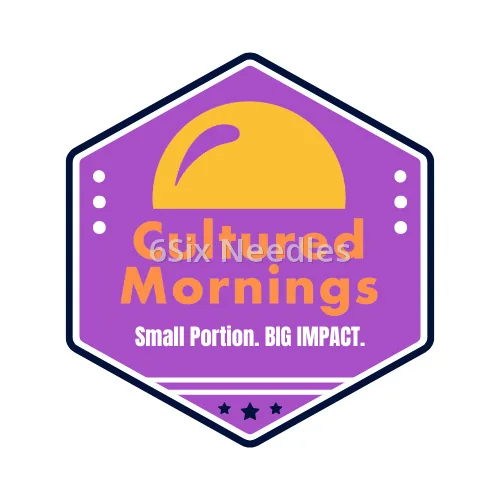
The design already had a clear visual hierarchy. Your eye lands on the large yellow graphic first. Then comes the Cultured Mornings name in orange. Below it sits the smaller message. Everything is contained inside a distinctive purple badge with contrasting border details.
As digital artwork, it works. But a screen and an embroidery machine are working with completely different materials. Digital artwork can hold extremely fine lines, tiny gaps and smooth curves without much trouble.
Embroidery is physical. Every detail has to exist as actual thread. Lettering, spacing, borders, contrast and stitch direction suddenly matter in ways they did not on the screen — and sometimes the smallest details create the biggest production questions.
The Smallest Words Were One of the Biggest Questions
One of the smallest parts of the artwork was also one of the most important: “Small Portion. BIG IMPACT.”
Small lettering can be challenging in embroidered logo patches because every character needs physical space. As the lettering gets smaller, gaps tighten and thin details can lose definition. Letters that look effortless digitally can become harder to separate once they are recreated with stitches.
That does not mean small text cannot work. It means the embroidery has to respect the physical limits of thread. The goal is not to preserve every digital pixel — it is to keep the design clear, balanced and unmistakably recognizable once it becomes a patch. (If your design has a lot of fine lettering, our guide to the best patch type for small text is worth a look.)
Wondering How Your Logo Would Look as a Patch?
Send us the artwork you already have and see how it can translate into a custom patch before moving forward.
Get My MockupMockup Before Payment • No Setup Fees • Tracked Shipping
The Border Had Less Room for Error
Round patches are naturally forgiving. This design is not round. Its angled badge shape makes inconsistencies easier to notice, and because the border defines the whole patch, the corners, line weight and overall geometry have to feel intentional.
When a border is done well, most people never stop to analyze it. They just see a patch that feels clean. When it is wrong, something can feel off immediately — even if the buyer cannot explain why. That is why the outside edge deserves nearly as much attention as the artwork inside it.
Color Feels Different When It Becomes Thread
There is another difference between a digital logo and a real embroidered patch that is easy to overlook: thread reacts to light.
A purple area on a computer screen is flat. Purple embroidery has texture. Individual stitches reflect light differently depending on their direction and angle, and the same thing happens with the yellow graphic and orange lettering.
That subtle movement is one of the reasons embroidery feels different from printing. You are not simply putting a logo onto fabric — you are rebuilding it with texture. When the stitch structure works with the artwork instead of fighting it, the thread itself becomes part of the design.
Before Production, the Design Had to Work as a Patch
The original artwork showed us the idea.
The next step was seeing how that idea would translate into an embroidered patch.
This is where the 6Six Needles digital mockup came in.
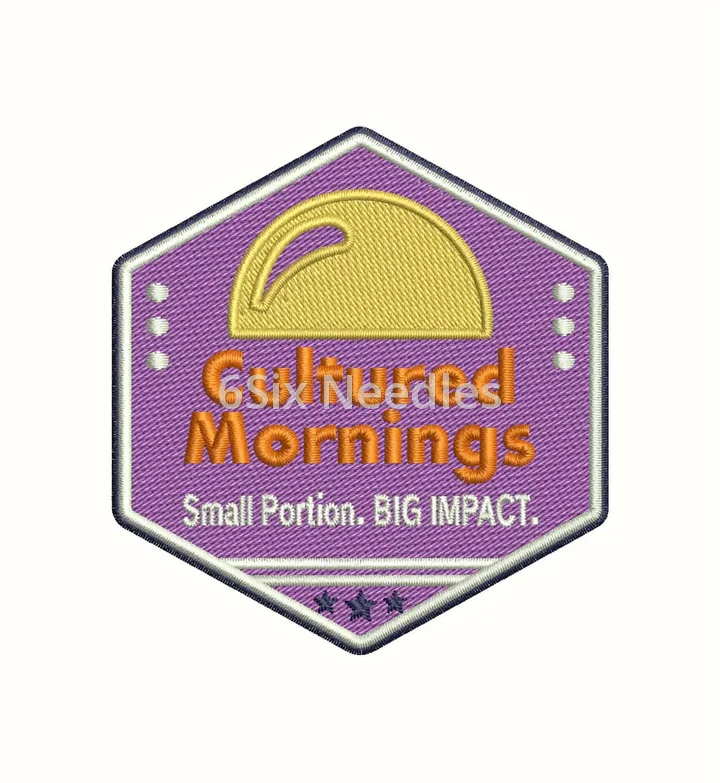
Instead of asking the customer to imagine how the flat artwork might look in thread, the mockup gave the design a more realistic patch direction before the finished product was produced.
It also gave us another chance to look at the details that mattered most — the small tagline, the angled border, the contrast between the orange lettering and purple background, and the overall visual balance.
That middle step matters.
Because there is a big difference between asking:
“Does the artwork look good?”
and asking:
“Does this artwork work as a patch?”
Then Pixels Became Thread
This is where the project stops being theoretical. The design is no longer pixels. It is thread.
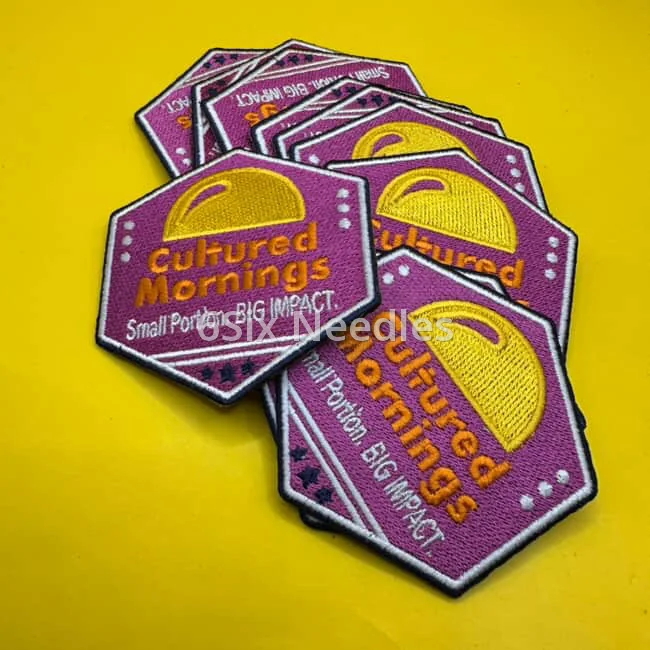
Look at the finished patches and the original hierarchy is still there. The yellow graphic grabs attention first. The Cultured Mornings name stays prominent. The purple field still gives the design its identity, the angular badge shape holds together, and the smaller message still belongs to the composition instead of disappearing into the embroidery.
A finished embroidered patch does not need to behave exactly like a computer screen. It needs to feel unmistakably like the artwork it came from. That is what mattered here.
But This Story Did Not End With the Patch
The part we like most about this project is not only the finished embroidery. It is what happened afterward.
The customer was happy with the work, and what started as one conversation about a custom patch became an ongoing relationship. He is still a 6Six Needles customer today.
That matters. Custom patch production is not only about getting one design through production. It is about becoming the company someone feels comfortable coming back to when the next idea shows up. For us, that is one of the strongest signs a project went right.
What This Patch Can Teach You Before Ordering Your Own
- Bold shapes usually give embroidery a strong visual foundation.
- Very small lettering deserves extra attention, because thread needs physical space.
- Strong contrast helps important details stay visually separated.
- Geometric borders require consistency.
- Thread creates texture and depth that flat artwork does not have.
- A strong embroidered patch preserves the identity of the original design rather than forcing every digital detail into thread.
When reviewing your own custom patch design, do not only ask, “Does this look exactly like my digital logo?” Also ask:
- Can I still read the important text?
- Are the main shapes immediately recognizable?
- Do neighboring colors separate clearly?
- Does the border feel balanced?
- Does my eye still go to the same important parts of the design?
And most importantly: does it still feel like my logo? Those questions usually matter more than whether every digital pixel survived unchanged.
Not sure which construction fits your artwork? The Patch Advisor walks you through it, and the patch size guide helps you pick dimensions for your placement. You can also browse custom embroidered patches or check custom patch pricing.
Why We Show the Original Artwork and the Finished Patch
Because ordering custom patches involves trust. A polished product photo can look great, but seeing the original artwork beside the finished embroidered patch tells you much more.
You can see what the customer actually started with, then what became real. That is more useful than asking a buyer to imagine what good embroidery might look like. It is real work, for a real customer — and you can see more of it in our work or read how it works.
What Would Your Artwork Look Like in Thread?
You do not need to understand embroidery files, stitch types or production terminology to get started. If you already have a logo, sketch or artwork, send it over. We can help take it from there.
See how your design can translate into a custom patch before you commit to production.
Mockup Before Payment • No Setup Fees • Tracked Shipping
Frequently Asked Questions About Turning a Logo Into an Embroidered Patch
Can I turn my existing logo into an embroidered patch?
Yes. Existing logos are one of the most common starting points for custom embroidered patches. Depending on the artwork, very fine details may need to be interpreted so the finished patch stays clean and recognizable.
Why can small text be difficult in embroidery?
Every embroidered letter has to be physically created with stitches. As lettering gets smaller, there is less room to keep individual characters, gaps and fine details clearly separated.
Will my embroidered patch look exactly like my digital artwork?
Not always pixel for pixel. Embroidery uses physical thread, so extremely fine lines, tiny details and small text can behave differently than they do on a screen. The goal is to preserve the identity and important details of the original design.
What if embroidery is not the best patch style for my artwork?
Some detailed designs may work better as woven, PVC, printed or another patch style. 6Six Needles can help determine which option makes the most sense for the artwork and intended use.